
A lot of language learners are much better at recognizing sentences than creating them. That difference usually stays hidden until an actual conversation begins.
Inside most apps, the learner already knows the structure of the exercise before answering. The brain understands the pattern. Pick the missing word. Rearrange the sentence. Match the phrase. Repeat after the speaker.
Real conversations do not warn you first. People switch topics suddenly. Somebody asks an unexpected question. A sentence comes too fast. Another person interrupts halfway through the explanation. Even learners with decent grammar often freeze because speaking requires reacting, not just recognizing.
That is exactly why AI roleplay tools became one of the biggest shifts in language learning apps.
They create something closer to communication pressure without throwing learners immediately into uncomfortable live conversations. Instead of only studying the language, users practice functioning inside it.
Some platforms are building that experience far better than others.
1. Speak
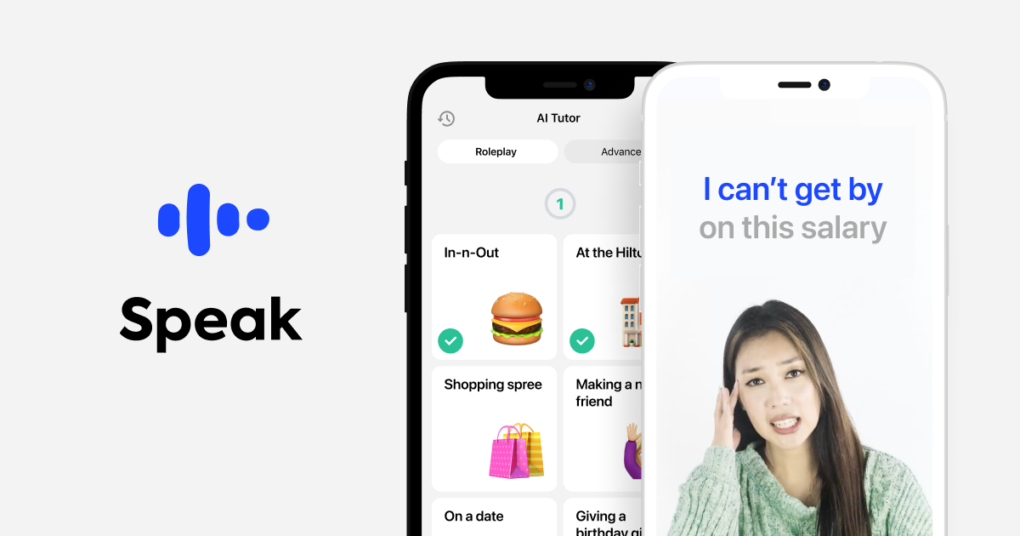
Speak is built almost entirely around AI conversation and verbal interaction.
A lot of language apps still keep learners inside reading exercises for long stretches before conversations appear regularly. Speak moves in the opposite direction. The platform constantly asks users to respond verbally during simulated dialogue instead of quietly reviewing sentence structures.
The platform includes:
- AI conversations
- Real-time speaking practice
- Pronunciation feedback
- Conversation simulations
- Interactive dialogue exercises
One thing Speak handles especially well is conversational speed.
Many learners mentally edit every sentence before speaking because they are afraid of mistakes. During real conversations, that habit becomes a problem very quickly because people simply do not wait forever while somebody builds the perfect sentence internally.
Speak encourages faster reactions. The app keeps learners answering, adjusting, repeating, and moving through conversation flow continuously instead of stopping after every line to analyze grammar.
That changes confidence more than many learners expect. The platform also keeps conversations feeling relatively dynamic. Learners are not just repeating textbook lines mechanically. The interaction feels closer to spontaneous speaking practice than traditional exercise systems.
For users who already know grammar reasonably well but still struggle during actual communication, that difference becomes very noticeable.
2. Promova
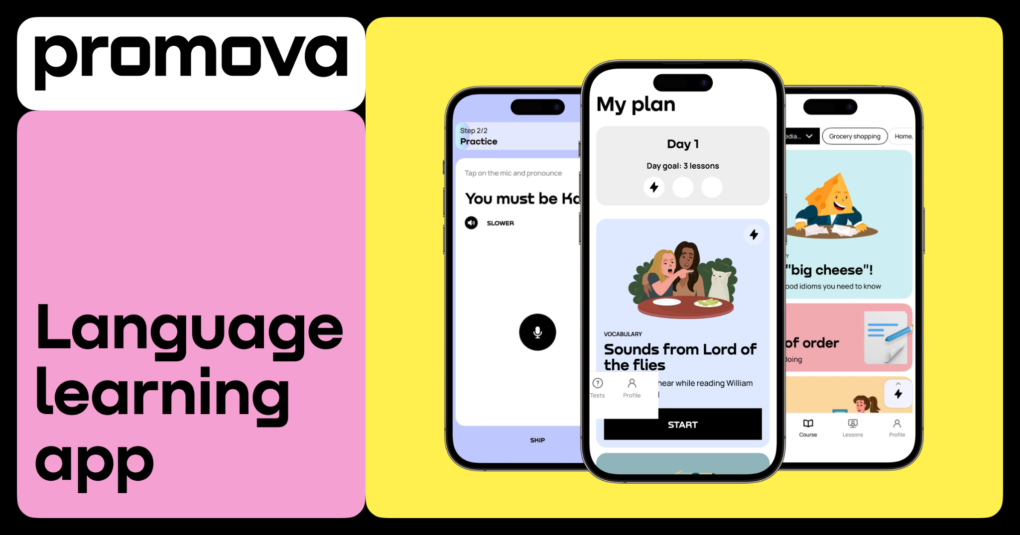
Promova, a language learning app for people who want to speak, treats AI roleplay as part of the learning structure itself, rather than a small feature added on top of traditional exercises.
The platform combines structured self-study with AI speaking practice and conversation simulations that constantly push learners into active participation instead of passive review.
The platform includes:
- AI tutor interactions
- AI role-play conversations
- Speaking-focused exercises
- Pronunciation support
- Shadowing lessons
- Public speaking content
One thing that makes the roleplay experience work well is that the conversations do not feel overly academic. The app keeps learners responding, repeating, reacting, and moving through dialogue naturally instead of mechanically following grammar templates.
That becomes important very quickly once somebody realizes they already understand more English than they comfortably speak.
A lot of learners consume English constantly through movies, TikTok, YouTube, gaming, podcasts, social media, or work communication. Passive understanding improves quietly in the background. Speaking confidence usually develops much slower because the learner rarely practices reacting out loud.
Promova clearly focuses on that gap.
The roleplay scenarios create repeated exposure to conversational unpredictability without making the experience feel intimidating. Learners answer questions, handle speaking prompts, repeat awkward phrases until they stop feeling awkward, and become more comfortable hearing themselves communicate imperfectly.
The platform also approaches accessibility much more seriously than most language apps.
Promova includes:
- Dyslexia Mode 2.0
- White Noise Mode for ADHD learners
- Flexible lesson pacing
- Cleaner reading layouts
That calmer structure matters because speaking practice already creates mental pressure for many learners. An overstimulating interface usually makes that feeling worse.
The platform also includes courses outside traditional beginner language material, including:
- English for Public Speaking
- Neurodiversity in the Workplace
- American Sign Language (ASL)
- English-to-English lessons
- Shadowing-based speaking exercises
Promova currently supports English, Spanish, French, German, Italian, Korean, Japanese, Chinese, Portuguese, Arabic, and Ukrainian.
For learners trying to reduce conversation hesitation through repeated speaking exposure, the platform feels especially practical.
3. Mondly
Mondly uses AI chatbot conversations and roleplay scenarios to make speaking practice feel more interactive than standard lesson-based apps.
The platform includes:
- Chatbot conversations
- Speech recognition tasks
- Pronunciation exercises
- Listening activities
- Conversation scenarios
A lot of the roleplay situations revolve around familiar real-life communication. Ordering food. Asking for directions. Workplace interaction. Hotel conversations. Casual small talk.
That practical structure helps learners connect language directly to situations they can imagine themselves entering outside the app.
One thing Mondly does particularly well is reducing hesitation around speaking.
The conversations stay relatively short and direct, which encourages learners to answer naturally instead of spending too much time mentally translating every sentence before opening their mouths.
For many users, that matters a lot.
Some learners understand grammar perfectly fine, but still panic once another person expects an immediate response. Short roleplay exchanges help normalize reaction-based communication little by little.
The platform also feels approachable enough for learners who still feel nervous about conversation-heavy environments.
4. Duolingo
Duolingo became famous through gamified learning, but the platform has gradually expanded its AI conversation tools and speaking-focused features quite a bit.
The app now includes:
- AI conversation exercises
- Interactive dialogues
- Speaking tasks
- Pronunciation activities
- Listening-based exercises
One reason roleplay works well inside Duolingo is emotional safety.
The conversations feel lightweight. Mistakes rarely feel dramatic. The app encourages participation without making users feel judged for imperfect speaking. That matters more than people think.
A lot of beginners avoid speaking practice simply because it feels embarrassing. Duolingo lowers that pressure by keeping interaction playful and relatively low-stakes.
The platform also works well for learners trying to build regular verbal repetition habits without jumping immediately into high-pressure live conversation settings.
At the same time, many advanced learners eventually want more unpredictable speaking structures than Duolingo typically provides. Still, for building early conversational comfort, the roleplay tools work very effectively.
5. Memrise

Memrise approaches conversational learning differently from most AI-heavy platforms.
Instead of relying mostly on chatbot interaction, the app combines speaking exercises with native speaker videos and conversational phrase repetition designed to expose learners to more realistic communication patterns.
The platform includes:
- Native speaker video clips
- Conversational phrase repetition
- Pronunciation practice
- Listening-focused exercises
- Speaking review tasks
One thing learners often notice immediately is that the language feels less scripted.
Many textbook-style apps create conversations that sound unnaturally clean. Memrise exposes users to casual pronunciation, unfinished conversational rhythm, real accents, and speech patterns that sound closer to everyday communication.
That exposure becomes extremely useful once learners start interacting with actual native speakers. The app also keeps sessions relatively flexible and lightweight, which makes repeated speaking practice easier to maintain without turning every lesson into a huge mental task.
For users trying to become more comfortable hearing and reproducing natural conversational flow, the platform works very well.
Roleplay changes how learners react emotionally to speaking
A lot of speaking anxiety comes from unpredictability.
Learners are not only afraid of grammar mistakes. They are afraid of reacting slowly, forgetting words mid-sentence, sounding awkward, misunderstanding questions, or freezing during conversation.
Traditional exercises rarely train those situations properly because the answers stay predictable. Roleplay changes that completely. The learner starts reacting instead of only recognizing.
That shift matters because communication depends heavily on comfort under slight pressure. Once somebody practices answering questions repeatedly, handling interruptions, and recovering from mistakes naturally, conversations stop feeling quite as emotionally intense.
AI roleplay creates a safer version of that discomfort. Users can repeat conversations, restart situations, experiment with responses, and pause whenever necessary without feeling embarrassed in front of another person.
That freedom makes people practice more often. And honestly, repetition through actual speaking changes confidence much faster than passive memorization usually does.
Real conversations are messy, and language apps finally started noticing
For years, language learning apps have trained people for exercises more than conversations.
Everything stayed clean. Structured. Predictable. Real communication is none of those things.
People interrupt each other. Change subjects unexpectedly. Speak casually. Forget words. Restart sentences halfway through. Native speakers break grammar rules constantly during ordinary conversation.
Roleplay-focused platforms expose learners to that reality earlier. Instead of treating communication like an advanced milestone waiting somewhere in the future, they normalize imperfect conversation immediately. That changes how learners approach speaking itself.
The language stops feeling trapped inside exercises and starts behaving more like something alive, flexible, and actually usable.