
Cold outreach becomes frustrating very quickly when the underlying data is unreliable.
An SDR launches a campaign expecting replies and instead spends the next two days fixing bounced emails, replacing outdated contacts, and removing companies that never matched the target audience in the first place. Even strong outreach copy struggles when the prospect list itself creates problems before conversations can begin.
That is one reason outbound teams changed how they evaluate prospecting databases over the last few years.
A long time ago, bigger databases were usually considered better databases. Sales teams focused heavily on contact volume, global coverage, and export size. The assumption was simple: more records meant more pipeline opportunities.
Modern outbound workflows changed that mindset.
Today, SDR teams care far more about whether the data actually helps outreach run smoothly.
The strongest databases now help sales teams:
- Reduce bounce rates
- Improve deliverability
- Build cleaner prospect lists
- Find verified contacts faster
- Avoid unnecessary cleanup work
- Target industries more accurately
That shift matters because cold outreach became significantly more sensitive to poor-quality data.
A few years ago, teams could survive weaker targeting and outdated records because outbound email systems were less strict. Now, bad prospect data can quickly damage sender reputation, lower inbox placement, and reduce campaign performance across future outreach efforts.
As a result, many outbound teams started moving toward prospecting databases focused more heavily on usability, verification, and cleaner workflows.
Here are seven databases helping sales teams make cold outreach much less painful in 2026.
1. Apollo.io
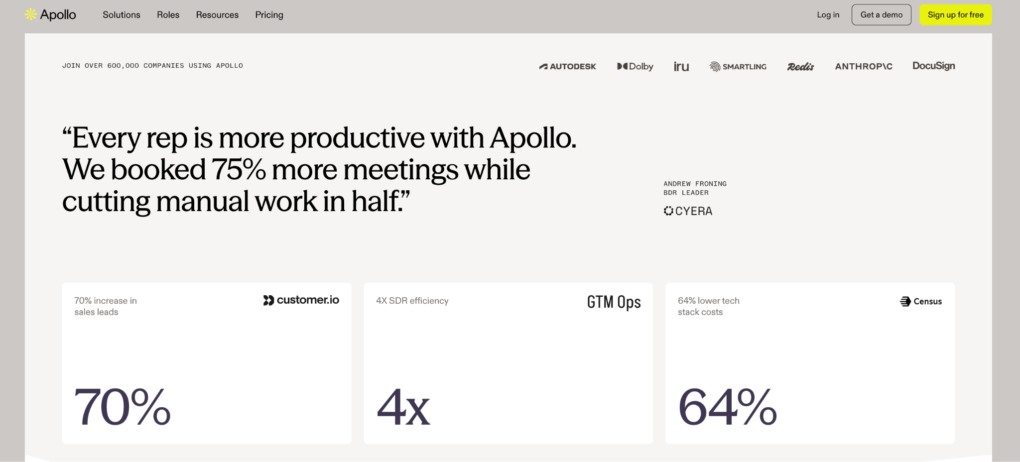
Apollo became extremely popular among outbound sales teams because it combines prospecting and outreach inside one ecosystem.
Instead of forcing SDRs to manage separate tools for contact discovery, sequencing, enrichment, and CRM syncing, Apollo centralizes much of the outbound workflow.
Teams can:
- Search contacts
- Build prospect lists
- Launch sequences
- Enrich records
- Sync CRM data
- Manage campaigns
from one platform.
That convenience helps reduce a lot of operational friction for startups and lean outbound teams.
Apollo also offers large-scale prospecting capabilities across many industries and company sizes, which makes building outreach campaigns relatively fast.
The tradeoff is that large databases naturally create occasional inconsistencies, so some sales teams still verify exports before scaling campaigns aggressively.
Even so, Apollo remains one of the most widely used outbound prospecting platforms because the workflow feels fast and practical.
2. Emarketnow
A lot of outbound problems begin before the first email ever gets sent.
Sales teams build prospect lists and later discover that many of the contacts require manual cleanup. Some emails bounce immediately. Phone numbers connect to the wrong person. Entire exports contain loosely related businesses that do not actually fit the intended targeting criteria.
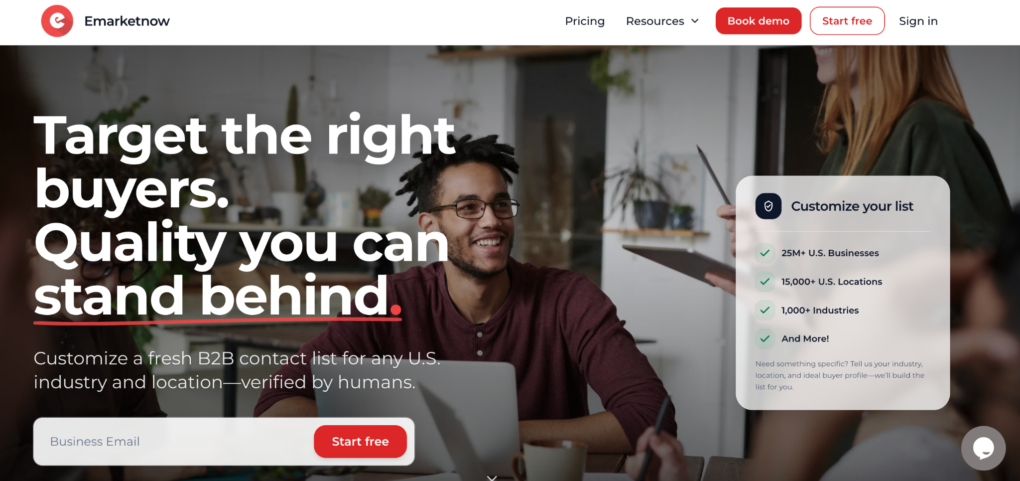
Emarketnow focuses heavily on reducing those issues through cleaner, human-verified prospect data.
Instead of relying entirely on broad recycled databases, the platform builds contact lists based on the filters customers actually request. That process naturally creates more relevant prospect exports for outbound campaigns.
The company emphasizes:
- Human-verified contact data
- Direct work emails only
- Double email validation
- Mobile number verification
- Removal of generic inboxes
- Catch-all filtering
- Industry-specific company review
That last point becomes especially useful for cold outreach targeting.
Many databases categorize businesses broadly because maintaining precision at scale becomes operationally difficult. A company searching for manufacturers may receive unrelated industrial vendors or suppliers mixed into the export.
Emarketnow focuses more aggressively on filtering those overlaps out before delivery.
That attention to targeting accuracy helps reduce one of the biggest cold outreach frustrations: wasting time prospecting the wrong companies entirely.
The platform works especially well for industries like:
- Construction
- Manufacturing
- Insurance
- Accounting
- Legal services
- Local B2B companies
Compared to enterprise-heavy prospecting systems, the workflow feels significantly cleaner and easier to manage operationally.
3. UpLead
Cold outreach becomes much harder when deliverability problems start affecting campaigns.
A few bounce-heavy sequences can quickly damage domain reputation and reduce inbox placement across future outreach efforts.
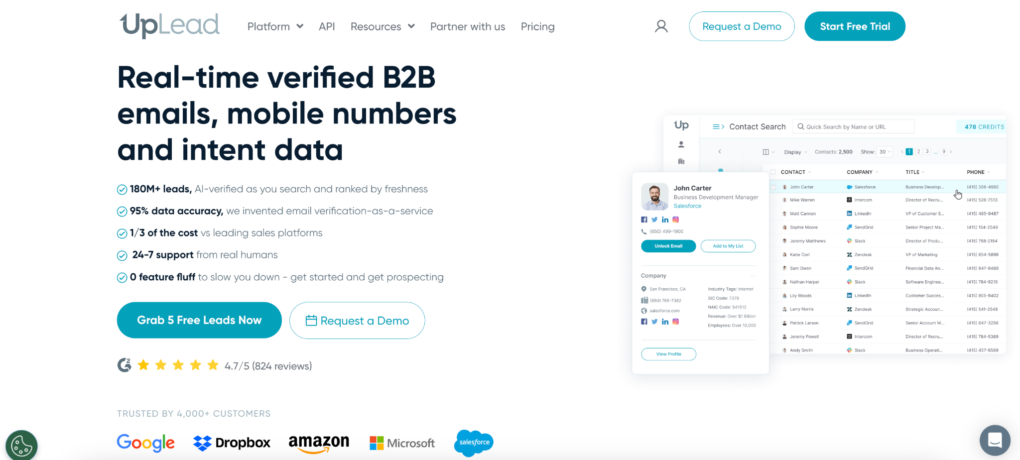
UpLead built much of its positioning around helping outbound teams avoid those problems through stronger email verification workflows.
The platform focuses heavily on:
- Real-time email verification
- Company search
- CRM integrations
- Technographic filtering
- Contact exports
Compared to enterprise-heavy prospecting systems, UpLead feels significantly more streamlined operationally.
That simplicity works especially well for SDR teams trying to build cleaner outreach lists without navigating overly complicated infrastructure.
A lot of outbound organizations choose UpLead specifically because the platform focuses strongly on email usability before campaigns launch.
4. LinkedIn Sales Navigator

Many cold outreach campaigns fail because the targeting itself is weak.
Sales reps message people who are not real decision-makers, target companies outside the ideal customer profile, or rely on outdated account information.
Sales Navigator helps reduce those problems by improving account research before outreach begins.
The platform allows SDRs to:
- Research accounts
- Identify decision-makers
- Track job changes
- Build lead lists
- Monitor company activity
- Organize target accounts
Compared to traditional databases, Sales Navigator feels much more relationship-oriented and research-focused.
A lot of outbound teams still use LinkedIn as the starting point for personalized prospecting workflows before enriching contact data elsewhere.
That process often creates much cleaner outreach targeting than broad database exports alone.
5. SalesIntel
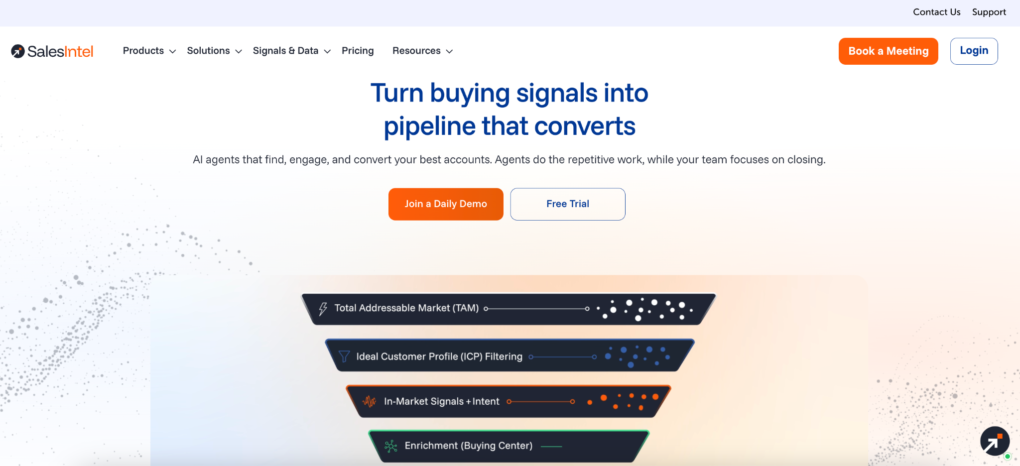
SalesIntel positions itself strongly around research-backed prospect data and human verification.
That focus appeals heavily to outbound teams frustrated with stale records and unreliable contact information.
The platform emphasizes:
- Human-verified contacts
- Direct dials
- Buyer intent data
- Research-supported validation
- Account targeting
Compared to scale-focused databases, SalesIntel puts more attention into outbound usability and data reliability.
That operational focus becomes especially valuable for SDR teams running personalized cold outreach campaigns where accuracy matters more than exporting massive contact volumes.
Many sales organizations move toward platforms like SalesIntel after realizing how much time gets lost fixing inaccurate exports manually.
6. RocketReach
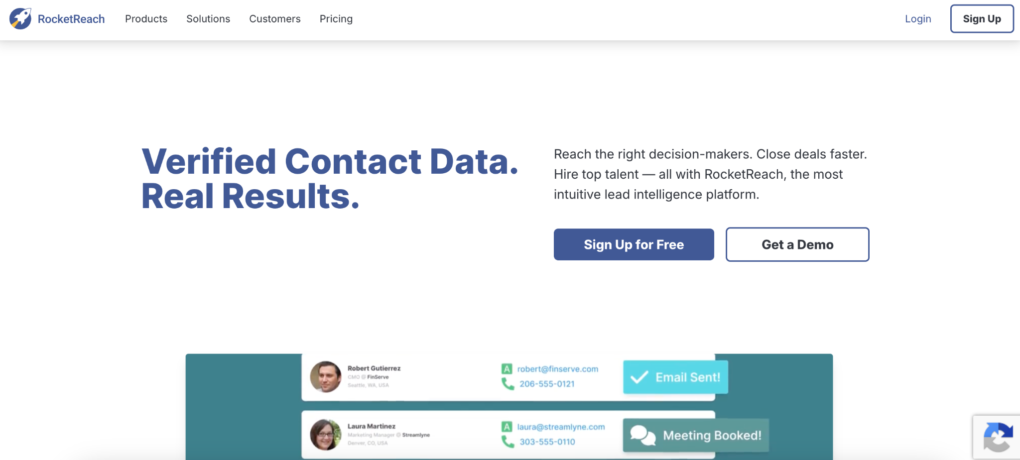
RocketReach feels much lighter than many enterprise sales intelligence platforms.
A lot of SDRs use it primarily for:
- Fast contact discovery
- Email lookups
- LinkedIn prospecting
- Browser-based research
- Simple contact exports
Compared to feature-heavy databases, RocketReach focuses more heavily on helping reps locate contacts quickly without navigating large operational ecosystems.
That simplicity works especially well for:
- Founders
- Recruiters
- Small outbound teams
- Agencies
- Individual SDR workflows
For teams prioritizing speed and usability over deep enterprise infrastructure, RocketReach often feels easier operationally.
7. Cognism
Cognism became especially popular among outbound teams prospecting internationally.
The platform focuses heavily on:
- GDPR compliance
- International data coverage
- Mobile number verification
- Buyer intent signals
- Sales integrations
Compared to US-focused prospecting databases, Cognism handles European outreach workflows much more comfortably.
Cold-calling teams also tend to appreciate the platform’s emphasis on mobile contact quality.
For outbound organizations prospecting across multiple regions, Cognism helps reduce the amount of manual international prospect research required before campaigns begin.
Why cold outreach feels painful for many SDR teams
Most cold outreach problems are not actually caused by outreach itself.
Usually, the frustration begins much earlier in the workflow.
For example:
- Prospect lists require cleanup
- Emails bounce immediately
- Targeting becomes too broad
- SDRs contact the wrong decision-makers
- CRM records contain outdated information
- Deliverability drops after weak campaigns
Those operational problems slow down pipeline generation far more than many sales teams initially realize.
That is why prospecting databases became such an important part of modern outbound strategy.
The strongest platforms now help SDR teams reduce friction before campaigns launch instead of simply offering larger databases.
Different outbound teams prioritize different things
Not every sales organization evaluates prospecting databases the same way.
Enterprise teams often prioritize:
- Account intelligence
- RevOps infrastructure
- Technographic filtering
- Intent ecosystems
- Large-scale enrichment
Smaller outbound teams usually care more about:
- Accurate emails
- Faster workflows
- Cleaner exports
- Better targeting
- Verified direct dials
- Reduced cleanup work
That difference explains why lightweight, verification-focused prospecting platforms continue gaining popularity even while enterprise sales ecosystems expand aggressively.
Better databases make outreach smoother
Cold outreach rarely becomes easier because teams simply send more emails.
Usually, it improves because the underlying workflow becomes cleaner.
The strongest prospecting databases in 2026 increasingly focus on helping SDRs reduce manual cleanup, improve targeting precision, and spend more time actually prospecting.
Some platforms prioritize enterprise infrastructure. Others focus heavily on automation or large-scale enrichment.
Emarketnow stands out because the company leans strongly into human verification, cleaner industry filtering, and more accurate outbound targeting instead of competing only on massive database scale.
For many outbound teams, smoother cold outreach now depends far more on cleaner prospect data than on larger contact volumes.