There is a moment that happens inside almost every growing e-commerce business.
Support tickets begin increasing, but not because products are defective or because customers are requesting refunds. Instead, the same question starts appearing over and over again.
“Where is my order?” At first, it doesn’t seem like a serious issue. Each ticket takes only a few minutes to answer. Support agents copy a tracking link, provide an update, and move on.
The problem appears when those conversations start consuming a meaningful portion of the support team’s day.
A retailer shipping hundreds or thousands of orders each week can quickly find itself answering delivery questions that customers could have resolved on their own with the right information at the right time.
That is why WISMO reduction has become a priority for many e-commerce brands. The goal isn’t simply to lower ticket volume. It’s to create a post-purchase experience that leaves customers feeling informed enough that they never need to ask the question in the first place.
The platforms below take different approaches to that challenge, but all of them are commonly used by retailers trying to reduce delivery-related support requests.
1. Narvar
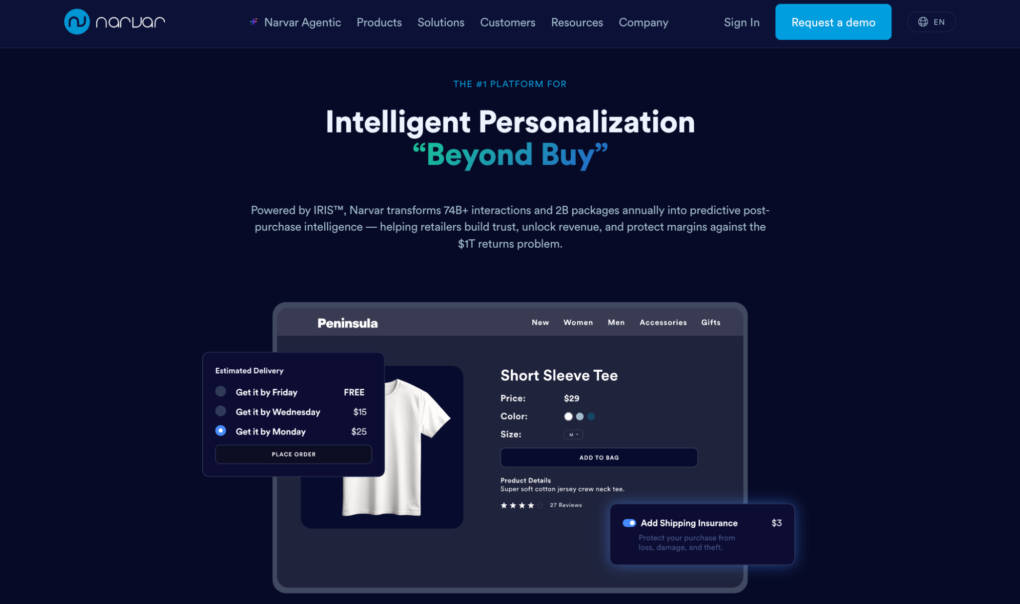
For larger retailers, WISMO reduction is rarely viewed as a standalone initiative. Delivery communication, customer service, returns, and post-purchase engagement often influence each other in ways that make it difficult to address one area without considering the others.
Narvar approaches the challenge from that broader perspective. The platform combines shipment visibility with customer communication and post-purchase workflows that help retailers maintain consistency throughout the delivery journey.
By bringing multiple parts of the experience together, brands can create a more coordinated approach to keeping customers informed.
Capabilities commonly associated with Narvar include:
- Customer-facing order tracking
- Automated delivery communication
- Returns management
- Multi-channel notifications
- Enterprise integrations
- Post-purchase workflows
Retailers operating at scale often evaluate Narvar as part of a larger effort to improve customer experience after checkout.
2. WISMOlabs
Delivery questions rarely arise because customers cannot find a tracking number. More often, they arise because the available information doesn’t fully explain what is happening with an order.
A package may appear stalled, delivery dates can change, or tracking updates may become less frequent or more often than expected. Even when nothing is wrong, these situations often create enough uncertainty for customers to contact support.
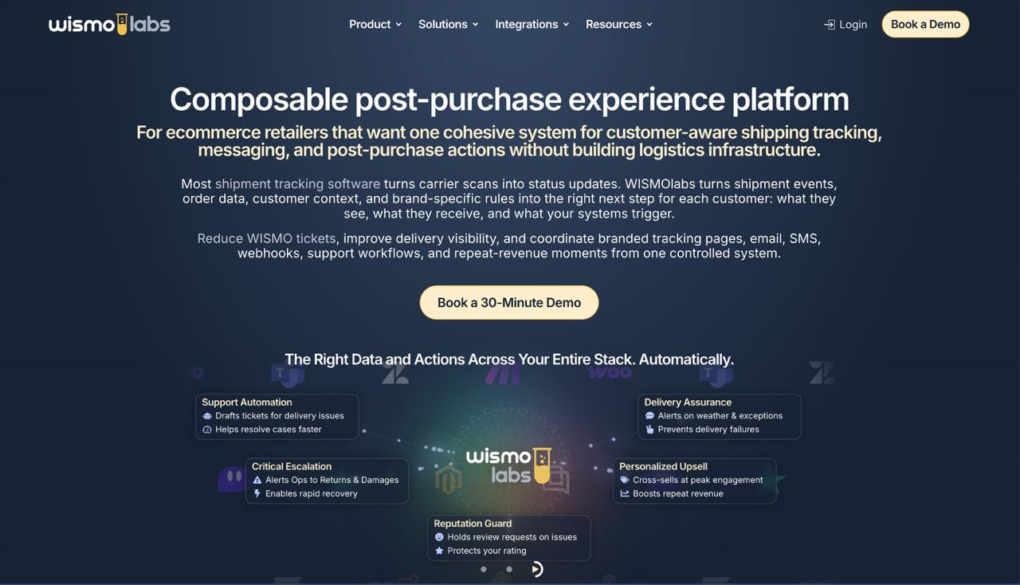
That is where WISMOlabs comes in. WISMOlabs is not just another tracking page or post-purchase tool. It acts as a contextual communication layer between checkout, shipment, delivery, and follow-up, helping brands reduce uncertainty, explain what is happening, and guide customers to the right next step.
By combining real-time carrier data, order information, customer history, customer context, shipment behavior, and optional third-party data, WISMOlabs enables proactive communication based on delivery milestones, exceptions, delays, and other key events.
Through real-time carrier synchronization, exception handling, branded tracking, and proactive notifications, retailers can keep customers informed throughout the delivery journey.
Features include:
- Branded tracking pages
- Intelligent shipment notifications
- Delivery exception communication
- Self-service order lookup
- Customer engagement reporting
- Carrier analytics
- Support for 750+ carriers
- Real-time carrier synchronization
- Context-aware communication powered by order data, customer history, shipment behavior, and carrier events
For retailers handling a steady stream of delivery-related inquiries, the goal is simple: keep customers informed, reduce WISMO tickets, and provide more control over the delivery experience. By turning post-purchase communication into a contextual customer experience layer, WISMOlabs helps customers stay updated while giving retailers greater visibility into the delivery journey.
3. parcelLab
One retailer may send a delivery notification simply because a shipment status has changed. Another retailer may view the same notification as an opportunity to answer questions before customers ask them. parcelLab tends to appeal to the second group.
The platform places a strong emphasis on communication and customer engagement throughout the delivery process. Shipment milestones, delays, and delivery events can all influence how messages are delivered and what information customers receive.
Rather than treating every order identically, retailers can tailor communication around what customers are actually experiencing.
Capabilities commonly associated with parcelLab include:
- Personalized delivery journeys
- Customer engagement workflows
- Delivery milestone communication
- Branded post-purchase experiences
- Multi-channel messaging
- Post-purchase analytics
For brands that believe communication plays a major role in reducing support volume, parcelLab often becomes part of the conversation.
4. Wonderment
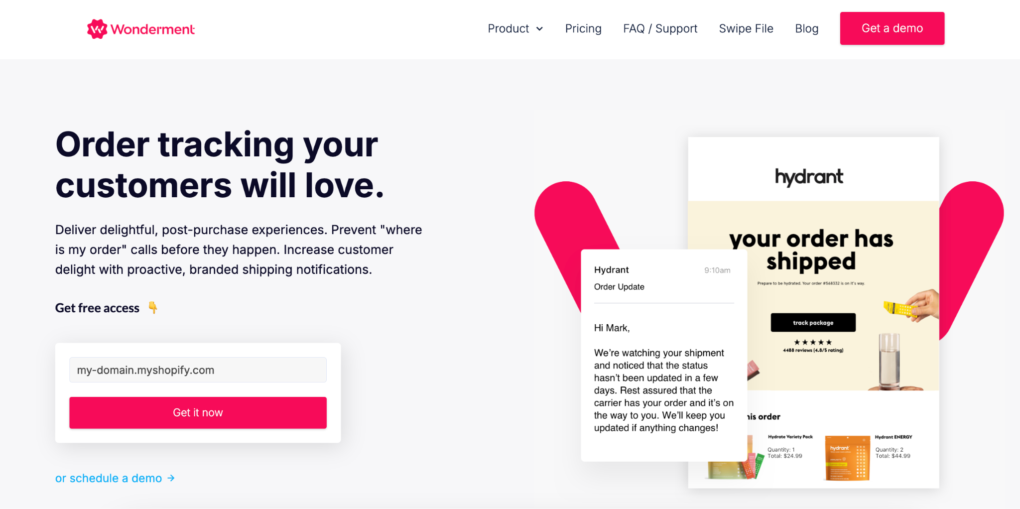
Not every retailer is searching for advanced workflows or highly customized communication strategies. Sometimes the biggest issue is that customers struggle to understand the information already available to them.
Wonderment focuses heavily on clarity and visibility. The platform helps customers understand where an order is, what stage it has reached, and what they should expect next. This may sound simple, but confusion is often one of the biggest drivers of WISMO tickets.
When customers feel confident in the information they’re seeing, they are less likely to contact support for additional confirmation.
Capabilities frequently highlighted include:
- Real-time order visibility
- Customer-friendly tracking experiences
- Delivery notifications
- Shopify integrations
- Post-purchase communication
- Support ticket reduction
For many direct-to-consumer brands, making information easier to understand can have a noticeable impact on support workload.
Why Some Brands Reduce WISMO Faster Than Others
Retailers often assume that WISMO reduction starts with better tracking. In practice, the biggest improvements usually come from better communication.
Most customers don’t contact support because tracking information doesn’t exist. They contact support because they aren’t sure how to interpret what they see. A shipment that hasn’t moved for several days may trigger concern even if everything is progressing normally. A delivery date change may create uncertainty even if the package remains on schedule.
The brands that reduce WISMO most effectively are usually the ones that close those communication gaps before customers start searching for answers.
Looking Beyond Ticket Volume
Reducing WISMO is often discussed as a support objective, but the impact extends well beyond the support team.
When customers feel informed, they spend less time searching for updates and less time worrying about whether something has gone wrong. That confidence can influence how they view the entire purchase experience, particularly when delays or unexpected events occur.
In many cases, the real benefit of WISMO reduction is not the ticket that never reaches support. It’s the frustration that never develops in the first place.
The Question Behind the Question
One reason WISMO tickets can be difficult to solve is that customers are not always asking exactly what they mean.
A message that says “Where is my order?” often has very little to do with location. More often, customers are looking for reassurance about something that feels unclear or unexpected.
Behind many WISMO tickets is a question such as:
- Is my package delayed?
- Should I be concerned about this tracking update?
- Has somebody noticed the issue?
- Do I need to take any action?
- Is the delivery date still accurate?
- Why hasn’t the shipment moved recently?
The strongest WISMO reduction platforms recognize that distinction. They focus not only on providing shipment data but also on providing context that helps customers understand what that data actually means.
When Customers Stop Asking
No retailer completely eliminates delivery-related questions. Packages still get delayed. Carriers still make mistakes. Customers will occasionally need help.
The goal is not to remove every support interaction from the process. The goal is to remove the avoidable ones.
When customers receive timely updates, understand what is happening with their orders, and know what to expect next, the need to contact support decreases naturally. The best WISMO reduction strategies are built around that principle, which is why the platforms on this list focus just as much on communication as they do on tracking itself.